
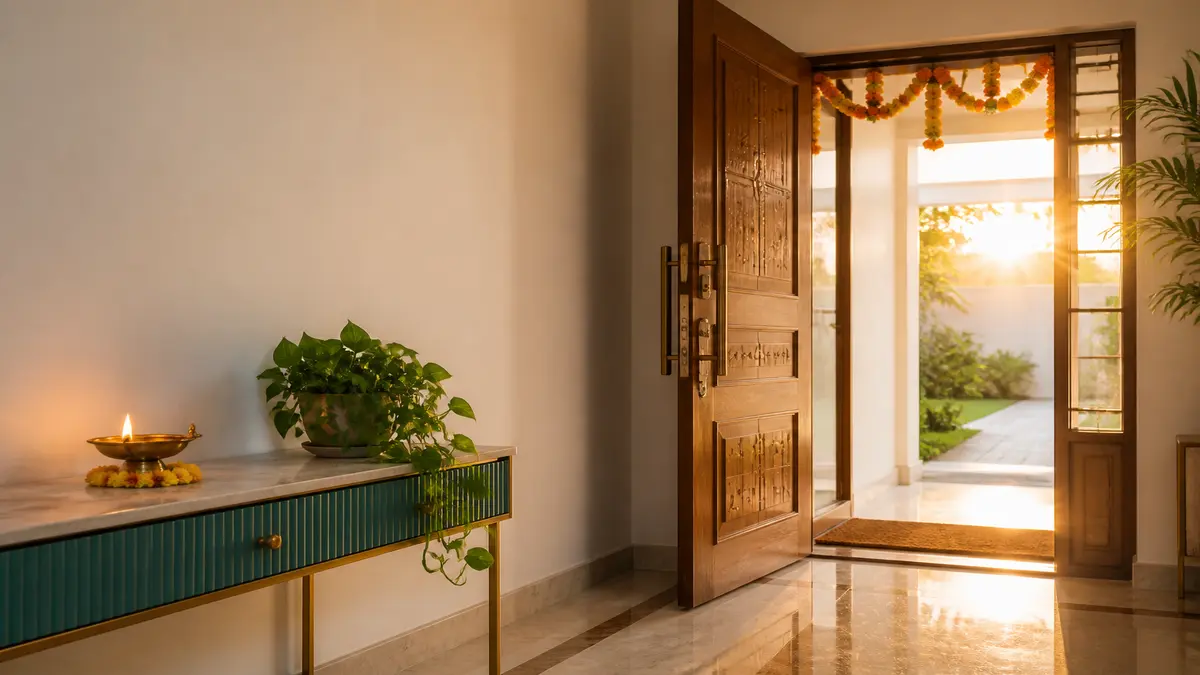
Imagine you just moved into a beautiful East-facing flat in Hyderabad, but the kitchen is in the Northeast, and your main entrance is blocked by a heavy shoe rack. Many buyers assume an East-facing property is automatically flawless, but incorrect interior placement can disrupt the natural flow of morning sunlight and ventilation. In traditional architecture, the East represents new beginnings, but poor layout choices can block this potential.
According to Vastu Shastra, the East is the direction of the rising sun and is governed by Lord Indra. Keeping this zone open and aligned with natural elements is believed to invite stability, good health, and positive energy into your daily life. However, even the best plots can suffer from energy imbalances if certain fundamental rules are ignored.
This guide covers the most critical East Facing House Vastu Mistakes to Avoid, offering practical, non-destructive remedies to help you balance your living space, whether you own a villa or rent an apartment.
| Detail | Info |
|---|---|
| Best Entrance Zones (Padas) | Jayanta or Indra (3rd and 4th Padas) |
| Directions to Avoid for Toilets | North-East and pure East |
| Ruling Element / Deity | Air & Light / Lord Indra & Surya (Sun) |
| Best Colors | White, light blue, pale green, cream |
| Key Remedy | Keep the East zone clutter-free and brightly lit |
| Last Updated | 2026 |
“An East-facing home captures the pure essence of the morning sun—keep its entrance open, light, and welcoming to let positive energy flow freely.”
Why is an East-Facing House Considered Auspicious?
An East-facing house is considered highly auspicious in Vastu Shastra because it receives the first rays of the morning sun. This direction is traditionally associated with Lord Indra and the Sun God, believed to bring health, vitality, and prosperity to the residents when designed correctly.
From a practical standpoint, morning sunlight carries essential Vitamin D and helps eliminate indoor dampness and bacteria after the night. By keeping the East side open with large windows or balconies, a home naturally stays brighter, warmer in winters, and well-ventilated. This scientific alignment with nature is a major reason why Vastu emphasizes Eastern openness.
However, simply buying an East-facing property is not enough. If the internal layout blocks this light or places heavy structures in this sensitive zone, the benefits are lost. Understanding the specific grid of the house ensures that solar energy is maximized throughout the day.
Where Should the Main Entrance Be Located?
In Vastu, the East direction is divided into nine equal parts or padas, starting from the North-East corner and moving towards the South-East. Not all East-facing entrances yield the same results.
| Entrance Zone (Pada) | Effect (as per Vastu) | Remedy If Placed Here |
|---|---|---|
| North-East (1st & 2nd Pada) | Believed to be highly positive, but can cause mild instability if cluttered. | Keep a water bowl with fresh flowers near the door. |
| Center East (3rd & 4th Pada – Jayanta & Indra) | Considered the most auspicious, inviting wealth and success. | Ensure the door is well-lit and opens clockwise. |
| South-East (8th & 9th Pada) | Believed to invite unnecessary arguments or financial stress. | Place an auspicious symbol like a Swastik or use a brass threshold. |
How to Plan Room Placements for Better Energy
Arranging your rooms according to the natural path of the sun is the core of Vastu. Here is a practical roadmap for placing key rooms in your East-facing home.
- Step 1 — The Puja Room (North-East): Place your prayer or meditation space in the North-East corner. This zone is considered the spiritual center (Ishan corner) and benefits from peaceful, early morning light.
- Step 2 — The Kitchen (South-East or North-West): Position your kitchen in the South-East corner (Agni corner) to align with the fire element. If that is unavailable, North-West is a suitable alternative. Ensure the cook faces East while preparing meals.
- Step 3 — The Master Bedroom (South-West): Secure your master bedroom in the South-West corner. This direction is traditionally associated with earth and stability, making it ideal for the head of the family.
- Step 4 — Living Room (North or East): Set up your living room in the North or East zones. These areas should be light and airy to welcome guests and positive energy.
- Step 5 — Toilets and Bathrooms (West or North-West): Build your washrooms in the West or North-West direction. Never place a toilet in the North-East, as it is believed to pollute the purest zone of the house.
Common East Facing House Vastu Mistakes to Avoid
Even in premium apartments, certain structural flaws can create a Vastu dosha (defect). Being aware of these errors can help you correct them early.
| Do | Don’t |
|---|---|
| Keep the North-East corner entirely clean, open, and lightweight. | Don’t place heavy furniture, staircases, or overhead water tanks in the East or North-East. |
| Ensure the Eastern boundary wall is slightly lower than the Western wall. | Don’t grow tall, thick trees in the East that block morning sunlight. |
| Place the main door in the 3rd or 4th pada of the East wall. | Don’t position the main entrance in the extreme South-East corner. |
| Use light, soothing colors for the Eastern walls. | Don’t paint the main entrance black or dark red. |
| Keep a wooden nameplate with good lighting at the entrance. | Don’t place shoe racks or garbage bins directly facing the main door. |
| Leave more open space in the East and North sides of the plot. | Don’t buy a plot that slopes downwards towards the West or South. |
Pro Tip
If you live in a rented apartment and your main door opens into a dark corridor, add a bright, warm yellow LED light outside your door and keep it on during the morning and evening to simulate natural sunlight.
Ideal Colors and Materials for East-Facing Homes
Colors play a significant role in Vastu by reflecting or absorbing specific energies. For an East-facing property, the goal is to enhance the air and light elements.
- Recommended Colors: White, cream, pale green, and light blue. These shades reflect morning light beautifully, making rooms look larger and more vibrant.
- Colors to Avoid: Dark red, black, and heavy purple. These colors absorb too much light and are traditionally believed to create a heavy, stagnant atmosphere in the Eastern zones.
- Materials: Use natural wood for the main door rather than metal. Brass fittings for the door handle and hinges are considered highly auspicious.
If you are exploring South Facing House Vastu Tips, you will notice that color requirements shift dramatically based on the ruling element of the direction.
Identifying and Correcting East-Facing Vastu Doshas
Not every home can be perfectly aligned. If your house has structural flaws, you do not always need to break walls. Simple, non-destructive remedies can help balance the space.
- Problem: Kitchen in the North-East.
Remedy: Keep the kitchen strictly vegetarian if possible, ensure excellent ventilation, and place a bronze bowl of uncrushed sea salt in the corner to absorb negative vibes. - Problem: Toilet in the North-East.
Remedy: This is a major flaw. If renting, keep the toilet door closed at all times, place a Vastu pyramid on the outside of the door, and use camphor blocks inside to neutralize odors and energy. - Problem: Main door in South-East.
Remedy: Hang a traditional Toran made of mango leaves or place a red or brown doormat to ground the fire element associated with the South-East. - Problem: Blocked Eastern Balcony.
Remedy: Remove heavy storage cupboards from the balcony. Add small indoor plants like a money plant or holy basil (Tulsi) to rejuvenate the area.
Watch Out
The single most common mistake in East-facing homes is placing a heavy staircase directly behind or above the main entrance. This blocks natural airflow and is traditionally believed to weigh down the household’s progress.
Believed Benefits of a Well-Balanced East-Facing Home
When you successfully avoid common errors and align your home properly, the space begins to work for you. Traditionally, a Vastu-compliant East-facing house is believed to offer:
- Enhanced Focus: Morning sunlight in the North-East is believed to improve concentration, making it excellent for students and working professionals.
- Physical Well-being: Proper cross-ventilation from the East helps maintain a fresh, germ-free environment.
- Financial Stability: A well-placed entrance in the Jayanta or Indra pada is traditionally associated with steady career growth and wealth accumulation.
- Harmonious Relationships: A balanced South-West master bedroom is believed to foster peace and understanding among family members.
Debunking Common Myths About East-Facing Homes
Myth: Any East-facing house is automatically 100% Vastu compliant.
What Vastu actually says: Facing East is just one piece of the puzzle. If your kitchen, bathrooms, and master bedroom are in the wrong zones, the property can still hold severe Vastu doshas. Internal placement matters just as much as the outer facing.
Myth: An East-facing home is the only good option for everyone.
What Vastu actually says: While East is universally positive, many people thrive in other directions depending on their profession. For instance, people in media or entertainment often look into Is North Facing House Good or Bad as per Vastu and find that North suits their career better.
5 Golden Rules for East Facing Homes
-
Check the Exact Compass Degree
Use a compass to find the true East; do not rely just on where the sun appears to rise from your window.
-
Keep the East Wall Lower
If building a house, ensure the Eastern and Northern boundary walls are shorter and thinner than the Western and Southern walls.
-
Plant Wisely
Grow low-height, green plants in the East. Avoid tall, dense trees that cast large shadows on the house in the morning.
-
Avoid Dark Paints
Never paint your Eastern facade or main door in heavy shades of black, grey, or dark red.
-
Light Up the Entrance
The main door must always be brightly illuminated, especially during the twilight hours.
Reality Check: Vastu Is a Guide, Not a Guarantee
Vastu Shastra is a traditional Indian architectural belief system designed to harmonize human dwellings with natural forces. Many of its rules—like placing kitchens in the South-East (away from morning winds) and keeping the East open for morning sunlight—are deeply rooted in practical climate control, thermal comfort, and ventilation.
However, an East-facing home with a minor Vastu flaw is not cursed. A home that breaks a rule is not doomed to failure. Lighting, cleanliness, cross-ventilation, and how happily you live in the space matter far more than rigid adherence to ancient texts. Remedies like adding plants, mirrors, or salt bowls are psychological and environmental tools to improve a space, not magical fixes.
When buying property in cities like Hyderabad or Bengaluru, do not reject a structurally sound, legally verified, and beautifully lit apartment just because the bathroom is slightly off the ideal grid. Weigh Vastu compliance alongside your budget, commute, structural integrity, and family needs.
Comparing Ideal vs. Incorrect Placements
| Room / Feature | Ideal Vastu Placement | Common Mistake to Avoid |
|---|---|---|
| Kitchen | South-East or North-West | North-East corner |
| Master Bedroom | South-West corner | East or South-East corner |
| Staircase | South, West, or South-West | Center of the house or North-East |
| Underground Water Tank | North-East or North | South-West or South |
Expert Tip
If you cannot change a heavy, incorrectly placed wardrobe blocking your Eastern wall, place a large mirror on the opposite wall to reflect light back into the room, creating an illusion of space and flow.
Frequently Asked Questions
Is an East-facing house good for everyone?
Yes, traditionally, an East-facing house is considered highly auspicious for almost everyone. It is believed to be especially beneficial for students, politicians, entrepreneurs, and people in administrative roles, as the sun represents authority, health, and fresh beginnings.
Where is the best place for a kitchen in an East-facing house?
The ideal location for a kitchen in an East-facing home is the South-East corner (Agni pada). When cooking, the person should ideally face East. If South-East is unavailable, the North-West corner is considered the second-best alternative.
What are the common Vastu defects in an East-facing entrance?
Common defects include placing the main door in the South-East corner, keeping shoe racks directly in front of the door, placing a staircase immediately outside the entrance, or having a higher boundary wall on the East side compared to the West.
Can a toilet be placed in the North-East corner of an East-facing house?
No, Vastu strongly advises against placing a toilet in the North-East corner. This is considered a major dosha as the North-East (Ishan) is the sacred zone for prayers and meditation. A toilet here is believed to block positive solar energy.
How can I fix a Vastu dosha in an East-facing house without renovation?
You can use simple remedies like keeping the East zone well-lit and clutter-free, placing a bowl of sea salt in affected corners to absorb negative energy, using light pastel colors on walls, and keeping indoor plants like Tulsi near the entrance.
Which is the best placement for the master bedroom in an East-facing home?
The best placement for a master bedroom is the South-West corner. This direction represents the earth element and is traditionally believed to provide stability, strength, and restful sleep for the head of the household.
Looking for a Vastu-Friendly Property in Hyderabad?
From east-facing plots to Vastu-compliant apartments — explore verified listings on BigProperty.in, or ask us directly.
Chat with us on WhatsApp or email [email protected]
Download the BigProperty App for property alerts, verified plots and Vastu-tagged listings in Hyderabad.

