
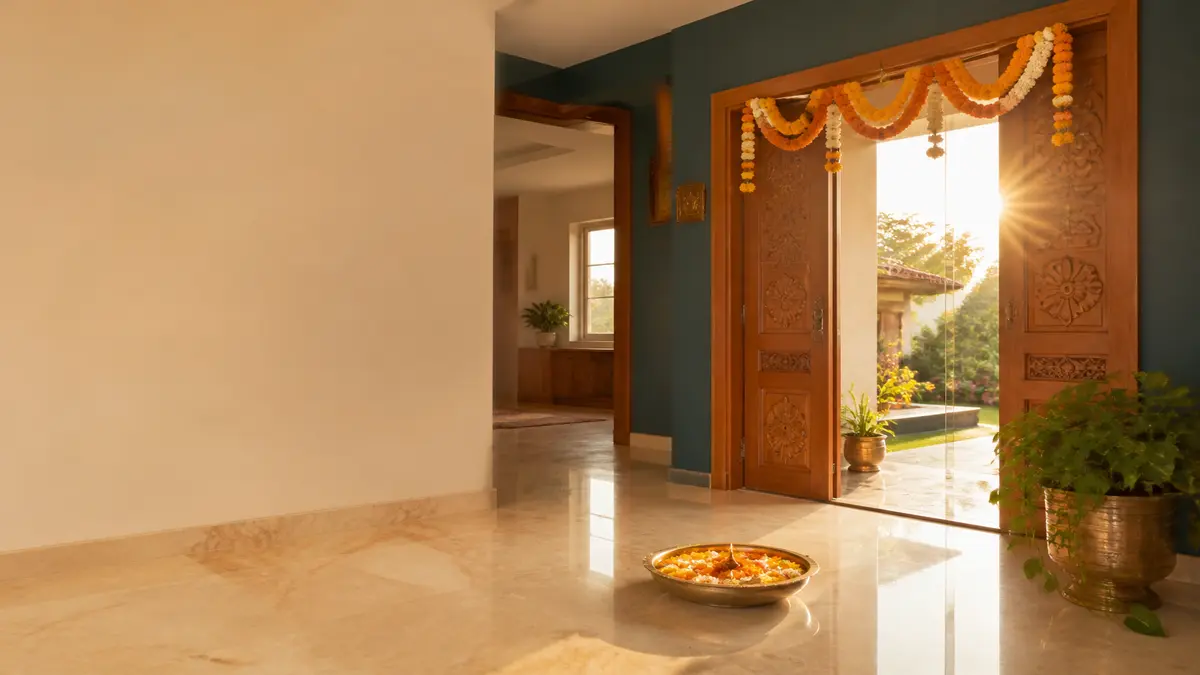
Imagine finding a beautiful flat in Hyderabad with a large balcony that welcomes the morning sun. Many homebuyers intentionally seek out such properties, wondering, Is East Facing House Good or Bad as per Vastu? In Indian real estate, an east-facing property is highly sought after, but simply having a door that points toward the sunrise is not enough to guarantee the harmonious lifestyle often promised.
Traditionally, the East direction is governed by Lord Indra, the deity of wealth and rain, as well as the Sun, which represents vitality, health, and new beginnings. On a practical level, a home oriented towards the east captures the early morning sunlight, which naturally brightens the space, provides essential morning Vitamin D, and warms the house gently after a cool night.
This 2026 guide will help you understand the ideal padas (zones) for an east-facing entrance, the best interior layout rules, and practical remedies for common Vastu flaws.
| Detail | Info |
|---|---|
| Best Direction | East (specifically the Jayanta and Indra padas) |
| Directions to Avoid | South-East corner for the main entrance |
| Ruling Element / Deity | Fire / Lord Indra & Surya (The Sun) |
| Best Colors | Light Blue, White, Cream, and Pale Green |
| Key Remedy | Brass sun emblem or Surya Yantra near the entrance |
| Best Day to Set Up | Sunday (associated with the Sun) |
| Last Updated | 2026 |
“An east-facing home is traditionally believed to invite the energising rays of the morning sun, setting a positive tone for health and welcoming new beginnings.”
What Makes an East-Facing House Auspicious in Vastu?
An east-facing house is considered highly auspicious in Vastu Shastra because it receives the first, gentle rays of the morning sun. This direction is associated with Lord Indra and Surya, bringing a natural flow of light, warmth, and vital energy into the home’s most active living spaces.
Beyond the spiritual significance, there is a strong practical rationale for this preference. The morning sun emits less harsh heat compared to the afternoon sun. Sunlight entering the home at dawn helps to naturally disinfect the space, reduces moisture buildup, and provides a well-lit environment that improves the mood of the inhabitants.
In traditional Indian architecture, aligning a house with the east ensures that the front of the home remains bright while keeping the harsh, hot afternoon rays hitting the back or solid walls. This creates a balanced indoor temperature throughout the day, which is especially beneficial in warmer climates like Telangana and Andhra Pradesh.
Where Should the Main Entrance Be Located in an East-Facing House?
According to Vastu, the direction a house faces is defined by the direction you face when stepping out of the main door. The eastern side of a property is divided into nine equal parts known as padas, starting from the North-East (Pada 1) to the South-East (Pada 9). Not all sections of the east are considered equal.
| Direction / Pada | Effect (as per Vastu) | Remedy If Placed Here |
|---|---|---|
| Pada 1 & 2 (North-East) | Believed to bring spiritual growth, but less ideal for the main door. | Keep the area clutter-free and place a water element nearby. |
| Pada 3 (Jayanta) & 4 (Indra) | Highly auspicious; traditionally associated with wealth and prosperity. | Ideal placement; simply keep the entrance well-lit. |
| Pada 5 (Surya) & 6 (Satya) | Considered neutral; generally acceptable for homes and shops. | Place an image of the rising sun on the door. |
| Pada 7, 8, & 9 (South-East) | Believed to attract unnecessary expenses and disputes. | Use a copper Swastika or a Vastu pyramid above the door. |
Vastu Tips for East-Facing House Interior Layout
Even if your entrance is perfectly placed, the internal layout determines the overall harmony of the space. Here is how to arrange your east-facing property for the best results.
- Step 1 — The Kitchen Setup: Position the kitchen in the South-East (Agneya) corner. This is traditionally the zone of the fire element. If South-East is unavailable, the North-West is the second-best alternative. Ensure the cook faces east while preparing meals.
- Step 2 — The Master Bedroom: The master bedroom should always be in the South-West (Nairutya) corner. This area is believed to provide stability, rest, and grounding energy for the head of the family. Sleep with your head pointing towards the south or east.
- Step 3 — The Living Area: Design the living room in the North-East (Ishanya) or East. This zone should be kept light, open, and welcoming, allowing fresh air and morning light to fill the space where the family gathers.
- Step 4 — The Pooja Room: The ideal spot for the prayer room is the North-East corner. While praying, the person should ideally face east. Keep this area exceptionally clean and free of heavy furniture.
- Step 5 — Staircases and Heavy Elements: Any heavy structures, including staircases or overhead water tanks, should be placed in the South, West, or South-West zones. Avoid building stairs directly in the North-East, as it is believed to block positive energy.
Essential Dos and Don’ts for East-Facing Homes
Balancing an east-facing home requires attention to where open spaces and heavy objects are placed. By following these guidelines, you can maximise the natural advantages of your property.
| Do | Don’t |
|---|---|
| Leave more open space in the East and North. | Do not leave more open space in the South or West. |
| Keep the North-East corner clean, light, and well-ventilated. | Do not place a toilet, septic tank, or heavy storage in the North-East. |
| Ensure boundary walls in the East and North are slightly lower. | Do not build high boundary walls in the East that block morning sunlight. |
| Plant small shrubs or a Tulsi plant in the East. | Do not plant tall, thick trees in the East or North-East. |
| Place the underground water tank in the North-East. | Do not place the overhead water tank in the North-East. |
Pro Tip
If you live in an east-facing rented apartment where the morning light is blocked by another building, place a mirror on the western wall of your living room. This helps reflect whatever natural light enters, creating an illusion of a brighter, more expansive space without violating any rental agreements.
Best Colors for an East-Facing House
Colors play a significant role in Vastu, as they reflect light differently and influence the mood of the space. For an east-facing home, the goal is to enhance the bright, airy feel of the morning sun.
- Recommended Colors: White, cream, light blue, and pale green. These colors naturally amplify daylight, keeping the home feeling fresh and visually spacious.
- Colors to Avoid: Dark red, black, and deep grey. These shades absorb light, making the eastern rooms feel unnecessarily dark and heavy.
Common East-Facing Vastu Doshas and Effective Remedies
Not every house is built perfectly. If you are dealing with structural flaws, there is no need to panic. Vastu provides several non-destructive remedies to balance the energy.
- Dosha: Main Door in the South-East Corner.
Remedy: Hang a copper Swastika or a traditional toran made of mango leaves above the door to filter the energy. You can also place two brass pyramids on either side of the entrance. - Dosha: Kitchen in the North-East.
Remedy: This is considered a major flaw. If you cannot relocate the kitchen, keep the stove in the South-East corner of the kitchen itself. Place a small bronze bowl filled with sea salt in the corner to absorb negative energy, and replace the salt weekly. - Dosha: South-West Corner is Lower than the North-East.
Remedy: The South-West should always be the highest and heaviest point. If it is low, place heavy wooden furniture, large indoor plants in heavy clay pots, or a raised platform in this corner to visually and physically anchor the space.
Watch Out
The single most common mistake people make is assuming an east-facing house is automatically perfect. Buying an east-facing property but placing the master bedroom in the North-East and the kitchen in the South-West completely contradicts Vastu principles. The internal layout is just as important as the facing direction.
Benefits Believed to Come with East-Facing Properties
When aligned correctly with Vastu principles, living in an east-facing house is traditionally associated with several positive outcomes:
- Health and Vitality: Morning sunlight provides a natural source of Vitamin D and helps regulate the body’s internal clock, which is believed to promote better sleep and overall health.
- Focus and Clarity: The well-lit, fresh environment of an eastern orientation is traditionally associated with improved concentration, making it ideal for students and working professionals.
- Prosperity: As the direction governed by Lord Indra, a well-balanced east-facing home is believed to invite steady financial growth and career success.
- Social Connections: The welcoming nature of the bright entrance is thought to foster positive relationships and strong social ties within the community.
Debunking Myths: Are East-Facing Houses Always Good for Everyone?
There are many misconceptions surrounding property directions. It is important to separate traditional facts from modern superstitions.
Myth: An east-facing house is the best choice for absolutely everyone.
What Vastu actually says: While east is universally auspicious, individual suitability can also depend on a person’s astrological chart and profession. For example, some practitioners believe that politicians or administrative leaders might benefit even more from a South Facing House as per Vastu.
Myth: If a house does not face east, it brings bad luck.
What Vastu actually says: No direction is inherently “bad” in Vastu. Every direction has its own ruling deity and specific benefits. If you are wondering Is North Facing House Good or Bad as per Vastu, the truth is that north is equally highly regarded for wealth and prosperity.
5 Vastu Rules Everyone Gets Wrong About East-Facing Homes
-
Not All East is Equal
Only the centre-east padas (Jayanta and Indra) are considered highly auspicious for doors.
-
Layout Trumps Direction
A poorly planned east-facing house is worse than a perfectly planned west-facing one.
-
Avoid Heavy Trees
Planting massive trees in the east blocks the very sunlight you are trying to capture.
-
Color Matters
Using dark colors on eastern walls absorbs light and makes rooms feel small and dull.
-
Remedies Exist
You do not need to demolish walls to fix doshas; simple objects like yantras and mirrors can help balance energy.
Reality Check: Vastu Is a Guide, Not a Guarantee
Vastu Shastra is a profound, traditional belief system designed to harmonize human dwellings with nature. Many of its rules—such as keeping the east open for sunlight and the south-west closed against afternoon heat—align perfectly with modern architectural principles of light, ventilation, and thermal comfort.
However, it is vital to remember that Vastu is a guide to living better, not a strict guarantee of wealth or health. A home that breaks a Vastu rule is not doomed. If you live in a rented apartment where you cannot control the kitchen or door placement, employing simple remedies, maintaining cleanliness, and ensuring good airflow will create a positive living environment.
Homebuyers should never reject a structurally sound, legally clean property in a great neighbourhood solely because the door is slightly off the ideal axis. Use Vastu to enhance the space you have, balancing ancient wisdom with practical common sense.
Frequently Asked Questions
Is an east-facing house good for everyone?
Generally, an east-facing house is considered highly auspicious and universally good as it welcomes the morning sun. However, individual results are believed to vary based on a person’s profession and astrological chart. A well-planned internal layout is ultimately more important than just the facing direction.
Which house facing is best according to Vastu?
East and North are traditionally considered the most auspicious directions for a house facing. East brings health and vitality due to the morning sun, while North is associated with Lord Kuber, the deity of wealth. Both directions are highly preferred in Indian real estate.
What are the major Vastu defects in an east-facing house?
The most severe defects include having the main entrance in the extreme South-East corner, locating the kitchen in the North-East, or having the South-West corner lower or more open than the rest of the house. Placing toilets in the North-East is also considered a major dosha.
Does the main door position matter in an east-facing home?
Yes, it matters significantly. The eastern side is divided into nine zones (padas). The most auspicious placement for the main door is in the 3rd (Jayanta) or 4th (Indra) pada from the North-East corner. Placing the door in the South-East zones is generally avoided.
How can I rectify a kitchen in the northeast corner of an east-facing house?
If you cannot move the kitchen, place the gas stove in the South-East corner of the kitchen room itself so you face east while cooking. Keep the North-East corner of the kitchen empty and very clean. You can also place a bronze bowl of sea salt in the kitchen to absorb negative energy.
What are the benefits of living in an east-facing property?
Living in an east-facing property is traditionally believed to bring good health, sharp focus, and prosperity. Practically, it ensures your home is flooded with gentle morning sunlight, reducing dampness, naturally warming the house, and creating a bright, uplifting atmosphere throughout the day.
Looking for a Vastu-Friendly Property in Hyderabad?
From east-facing plots to Vastu-compliant apartments — explore verified listings on BigProperty.in, or ask us directly.
Chat with us on WhatsApp or email [email protected]
Download the BigProperty App for property alerts, verified plots and Vastu-tagged listings in Hyderabad.

