
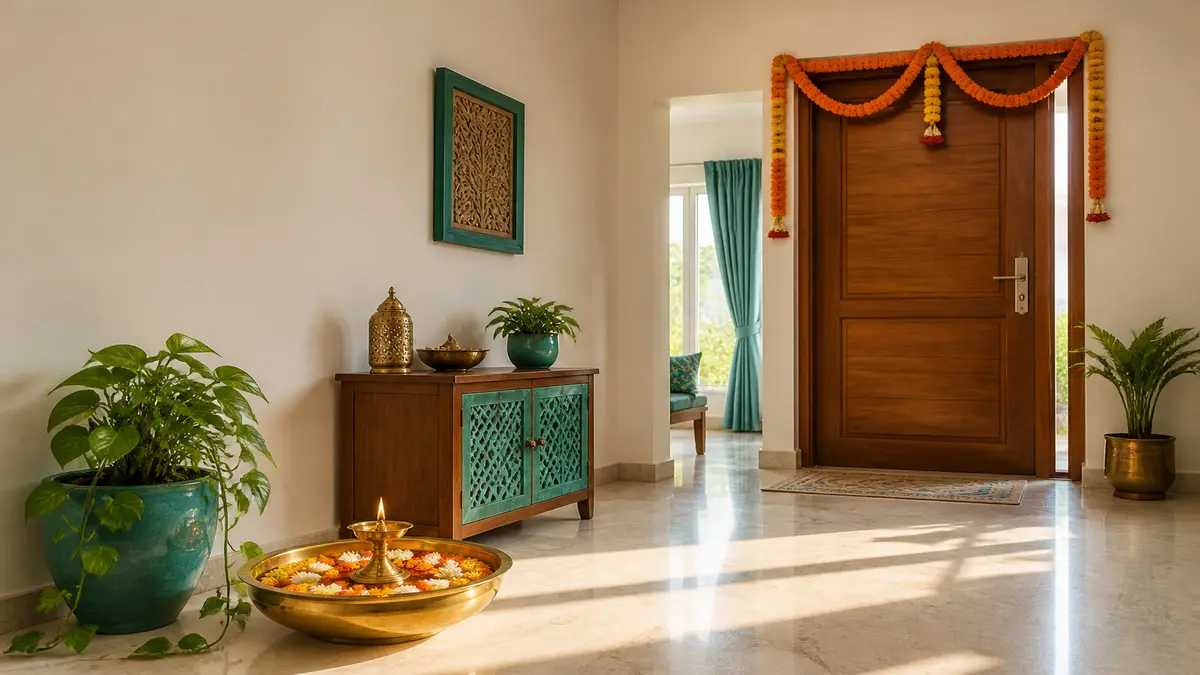
West Facing House Vastu Dos and Donts for 2026: Debunking Myths & Maximizing Prosperity
Imagine finding the perfect 3BHK flat in your favorite Hyderabad neighborhood, only to hesitate because the main door faces west. Many Indian home buyers and tenants face this dilemma, influenced by the widespread myth that only east or north-facing homes bring luck. However, when you understand the essential West Facing House Vastu Dos and Donts, you can easily turn your property into a highly harmonious and prosperous space.
In traditional Vastu Shastra, the western direction is governed by Lord Varuna, the God of Water and rain, and ruled by the planet Saturn (Shani). Far from being unlucky, this direction is traditionally associated with wealth accumulation, long-term gains, and strong social connections. The secret lies in balancing the internal elements and ensuring the main entrance falls in the correct auspicious zones.
This guide helps homeowners maximize positive energy in their west-facing properties by debunking myths, detailing the exact entrance placements, and providing actionable Vastu corrections for 2026.
| Detail | Info |
|---|---|
| Best Direction (Entrance) | West 3rd (Sugriva) and 4th (Pushpadanta) Padas |
| Directions to Avoid | South-West corner, North-West corner for entrance |
| Ruling Element / Deity | Water Element / Lord Varuna |
| Best Colors | White, Silver, Beige, Light Blue, Cream |
| Key Remedy | Brass Swastika or Brass Pyramid near flawed entrances |
| Ideal For | Business owners, politicians, IT professionals, teachers |
| Last Updated | 2026 |
“A west-facing home, when aligned with the right entrance padas, is traditionally believed to be a powerful magnet for wealth, social respect, and long-term prosperity.”
What is a West Facing House in Vastu?
A west-facing house is a property where you face the exact west direction while standing inside your home and stepping out of the main entrance. According to Vastu Shastra, it is considered highly auspicious if designed correctly, as the west is ruled by Lord Varuna, bringing stability, financial growth, and success in relationships.
To determine if your house is truly west-facing, you must use a reliable compass. Stand at your main doorway looking outward. If the compass needle points to 270 degrees (or anywhere between 247.5° and 292.5°), you live in a west-facing property. It is important not to guess the direction based solely on sunset views, as neighboring buildings or structural angles in modern apartments can easily mislead you.
In classical Vastu, no direction is inherently bad. While many people instinctively look for Vastu for East Facing House options due to the association with the rising sun, the west direction offers unique, grounded energy that is believed to foster immense discipline and material success.
Where Should the Main Entrance Be for a West Facing House?
The placement of your main door is the most critical factor in determining the energy flow of a west-facing home. Vastu divides the western side of your house into 9 equal parts, called Padas, starting from the North-West (Pada 1) and ending at the South-West (Pada 9). The most favorable entrances are situated in the middle-west portion.
| Pada (Entrance Position) | Effect (as per Vastu) | Remedy If Placed Here |
|---|---|---|
| Padas 1 & 2 (North-West) | Believed to bring instability and financial struggles. | Place a brass pyramid on either side of the door. |
| Pada 3 (Sugriva) | Highly auspicious; believed to attract wealth and growth. | None needed; enhance with good lighting. |
| Pada 4 (Pushpadanta) | Highly auspicious; believed to bring financial gain and harmony. | None needed; keep the area clutter-free. |
| Pada 5 (Varuna) | Neutral; associated with mixed results. | Use a wooden toran or metal wind chimes. |
| Padas 6 & 7 (West to South-West) | Unfavorable; traditionally linked to fatigue and stress. | Fix a brass Swastika above the main door. |
| Padas 8 & 9 (South-West) | Highly inauspicious; believed to cause health and debt issues. | Use Lead metal blocks or a Vastu energy helix under the threshold. |
Step-by-Step Placement Guide for West Facing Homes
Once your entrance is optimized, aligning your internal rooms with their ideal zones ensures that positive energy flows freely throughout the property.
- Step 1 — The Living Room Setup: The ideal placement for the living room in a west-facing home is the North-West, North, or East zone. This is believed to create a welcoming atmosphere for guests and a harmonious space for the family.
- Step 2 — The Kitchen Placement: Fire elements must be carefully placed. The South-East (SE) is the primary choice for a kitchen. If SE is unavailable, the North-West (NW) is an acceptable secondary option. Never place the kitchen in the North-East or South-West.
- Step 3 — Master Bedroom Location: The master bedroom should always be in the South-West (SW) corner. This zone is associated with the Earth element, bringing stability, peaceful sleep, and strong leadership to the head of the family.
- Step 4 — Pooja Room Alignment: Place the Pooja room in the North-East (NE) corner, known as the Ishanya corner. Ensure that you face East or North while praying to maximize focus and spiritual energy.
- Step 5 — Balconies and Open Spaces: Ensure that maximum open space and balconies are situated in the North or East directions. This allows the gentle morning sunlight to enter the home while blocking the harsh afternoon heat from the west.
Essential Dos and Donts for West Facing House Layouts
Creating a balanced environment means knowing exactly what to embrace and what to avoid. Here are the core rules for 2026.
| Do | Don’t |
|---|---|
| Do place the master bedroom in the South-West corner. | Don’t place the main entrance in the extreme South-West. |
| Do keep the North-East zone clean, light, and clutter-free. | Don’t place a toilet, kitchen, or septic tank in the North-East. |
| Do ensure the Southern and Western walls are thicker and higher. | Don’t have large windows or heavy openings on the South-West walls. |
| Do plant tall trees in the South and West boundaries. | Don’t plant heavy or tall trees in the North or East corners. |
| Do slope the plot or roof gently towards the North or East. | Don’t allow the plot to slope towards the South or West. |
| Do place overhead water tanks in the South-West or West. | Don’t place underground water tanks in the South-West. |
Pro Tip
For those living in rented apartments who cannot easily change room functions, you can manipulate internal energy using colors and small furniture shifts. For example, if your bedroom is not in the South-West, simply ensure your bed is placed in the South-West corner of whichever room you are using, keeping your head facing South while sleeping.
Ideal Colors and Materials for West Facing Homes
The western direction is strongly associated with the element of space and the planet Saturn. Using the correct color palette is believed to enhance the natural energy of this zone.
- Recommended Colors: White, silver, cream, beige, and light blue are highly beneficial. These colors reflect light effectively and are believed to bring calmness and financial stability.
- Colors to Avoid: Bright red, deep green, and dark brown should be avoided on western walls. Red is associated with the fire element, which can clash with the natural energy of the west, potentially leading to arguments or restlessness.
- Materials: Incorporate brass, copper, and glass elements in your western decor. A brass wind chime in the western window is traditionally believed to invite positive vibrations.
Common Vastu Doshas in West Facing Homes and How to Fix Them
Architectural flaws, known as Vastu doshas, are common in modern flats and builder floors. Fortunately, many of these can be corrected without structural demolition.
- Dosha: Entrance in the South-West.
Remedy: This is a major flaw. Paint the main door in light, earthy tones like beige. Fix two small brass pyramids on the outer frame of the door. Keep the entryway brightly lit at all times. - Dosha: Kitchen in the North-East.
Remedy: This creates a clash of fire and water elements. If you cannot move the kitchen, paint the kitchen walls yellow. Keep a bronze bowl filled with sea salt in a corner to absorb negative energy (replace the salt weekly). - Dosha: Heavy Structures in the North-East.
Remedy: The North-East should be light. If you have heavy wardrobes here, move them to the South or West walls. Place a small indoor water fountain or a bowl of fresh water in the North-East to restore balance. - Dosha: Missing Western Corner (Cut in the Plot).
Remedy: A cut in the west can hinder career growth. Install a Vastu mirror on the western wall to symbolically extend the space, or place tall, heavy indoor plants in that area to anchor the energy.
Watch Out
The most common mistake people make is ignoring the exact degree of the property. Simply looking at the sunset is not enough to declare a house “west-facing.” An entrance that visually looks west might actually fall into the South-West zone on a compass, completely altering the Vastu dynamics.
Believed Benefits of a West Facing House
When aligned with the correct Vastu principles, living in a west-facing property is traditionally associated with several lifestyle benefits:
- Financial Prosperity: The west direction is believed to attract long-term wealth, making it highly beneficial for business owners, stock traders, and real estate investors.
- Social Reputation: Lord Varuna governs social connections. Homes here are believed to help residents build strong networks and enjoy community respect.
- Career Stability: Ideal for politicians, lawyers, teachers, and religious leaders, as the energy is said to support authoritative and advisory roles.
- Youthful Energy: Traditionally, west-facing homes are believed to be excellent for youngsters and teenagers, bringing a sense of liveliness and enthusiasm to the household.
Myths vs Facts: Is a West Facing House Good According to Vastu?
Many misconceptions prevent buyers from choosing excellent west-facing properties. Let’s clear them up.
Myth: West-facing homes are always unlucky and bring poverty.
What Vastu actually says: This is entirely false. West-facing homes, particularly those with entrances in the 3rd and 4th padas, are considered highly prosperous. They are especially lucky for people in trading, politics, and communication sectors.
Myth: You cannot have a pooja room in a west-facing house.
What Vastu actually says: You can absolutely have a pooja room. The property’s facing direction does not change the internal grid. The pooja room can still be placed in the auspicious North-East corner of the house.
Myth: West-facing houses get too hot and are unlivable.
What Vastu actually says: While the west side receives afternoon sun, Vastu principles counter this by advising thicker western walls and fewer windows in the west. This naturally insulates the house, keeping the interior cool.
5 Vastu Rules Everyone Gets Wrong About West Facing Homes
-
The Compass is King
Never guess the direction by the sun; always use a compass to find the exact padas.
-
The South-West Rule
Keep the South-West corner the heaviest and highest part of the entire home.
-
Plant Placement Matters
Tall trees belong in the south and west; keep small plants and water features in the north and east.
-
Color Psychology
Avoid red and green on western walls; stick to neutral tones like cream and silver.
-
Slope Secrets
Ensure the floor of the house slopes slightly downwards towards the North-East.
Reality Check: Vastu Is a Guide, Not a Guarantee
It is important to remember that Vastu Shastra is a traditional belief system designed centuries ago to harmonize human dwellings with nature. Many of its rules align perfectly with modern architectural logic. For instance, the recommendation to have fewer windows on the western wall directly reduces heat gain from the harsh afternoon sun in India, keeping the home cooler and more energy-efficient.
Similarly, keeping the North-East open and having the master bedroom in the South-West promotes cross-ventilation and provides a quiet, private space away from the main road. A home that breaks a Vastu rule is not “doomed.” Practical remedies, proper lighting, good ventilation, and a positive mindset matter just as much as directional alignments.
Buyers should never reject a structurally sound, well-ventilated, and legally clean property solely based on Vastu fears. If you find an excellent west-facing flat among Telangana RERA Approved Projects, evaluate its natural light, layout, and your budget first. Minor doshas can almost always be corrected with simple, non-destructive remedies.
Frequently Asked Questions
Is a west facing house considered bad for residents?
No, a west-facing house is not considered bad. According to Vastu, when the main entrance is located in the auspicious 3rd (Sugriva) or 4th (Pushpadanta) padas, the house is highly prosperous. It is traditionally believed to bring long-term financial stability, respect in society, and excellent networking opportunities for the residents.
Which entrance position is considered the most auspicious in a west facing house?
The most auspicious entrance positions in a west-facing house are the middle padas. Specifically, the 3rd pada (Sugriva) and the 4th pada (Pushpadanta) are considered the best. These zones are believed to attract wealth, positive energy, and peace, while entrances in the extreme South-West or North-West should be avoided.
Can I place the kitchen in the south-east of a west facing house?
Yes, you can and should place the kitchen in the South-East of a west-facing house. The South-East is governed by the fire element (Agni), making it the absolute best Vastu direction for a kitchen in any property, regardless of which way the main door faces. The North-West is the second-best alternative.
What are the most common Vastu doshas found in west facing homes?
The most common Vastu doshas in west-facing homes include having the main entrance in the extreme South-West corner, placing the kitchen or toilet in the North-East, or having large, heavy windows on the western walls. Another frequent dosha is an underground water tank placed in the South-West instead of the North-East.
How can I fix a main door that is not in the recommended west facing position?
If your main door is in an unfavorable position like the South-West, you can fix it without demolition. Keep the entrance well-lit, paint the door in light earthy tones, and fix a brass Swastika or a set of Vastu pyramids above the door frame. Placing a red doormat can also help block negative energies.
Which zodiac signs benefit the most from living in a west facing home?
As per traditional Vastu and astrology, west-facing homes are particularly beneficial for individuals with zodiac signs ruled by Saturn, Venus, and Mercury. This includes Gemini (Mithuna), Libra (Tula), and Aquarius (Kumbha). People in professions like teaching, politics, law, and business are also believed to thrive in these homes.
Looking for a Vastu-Friendly Property in Hyderabad?
From east-facing plots to Vastu-compliant apartments — explore verified listings on BigProperty.in, or ask us directly.
Chat with us on WhatsApp or email [email protected]
Download the BigProperty App for property alerts, verified plots and Vastu-tagged listings in Hyderabad.

