
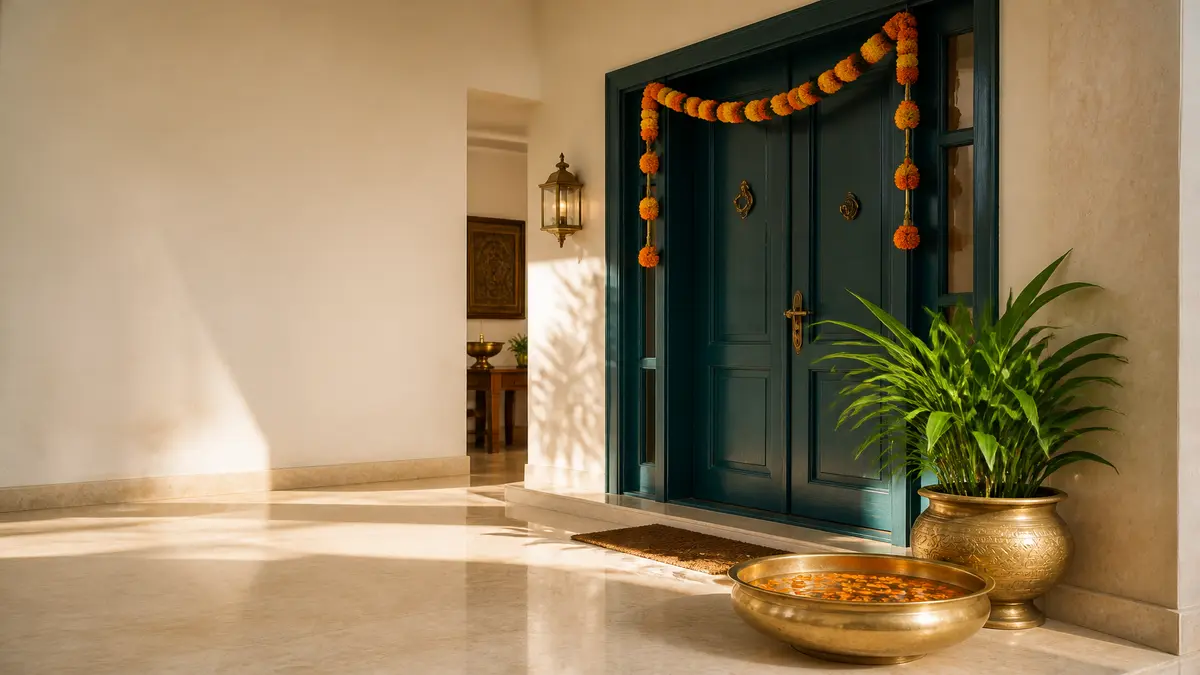
Imagine finally finding that spacious 3BHK flat in Hyderabad with perfect ventilation, only to pause because the main door faces West. Many home buyers hesitate, wondering if a West-facing entrance brings bad luck. In the Indian real estate market, directional myths often confuse families and lead them to pass up perfectly good properties.
According to traditional Vastu Shastra, no direction is inherently bad. The West is ruled by Lord Varuna (the deity of water and oceans) and governed by the planet Saturn (Shani). While East and North are celebrated for morning sunlight, the West is a direction historically associated with financial gains, strong social connections, and steady professional growth if aligned properly. The ancient texts suggest that when balanced correctly, this direction can be a massive source of prosperity.
This 2026 guide clears the confusion by answering is West facing house good or bad as per Vastu, detailing ideal entrance padas, simple remedies, and practical layout tips to harmonise your home.
| Detail | Info |
|---|---|
| Best Direction | West (Specifically 3rd, 4th, and 5th Padas) |
| Directions to Avoid | South-West and North-West corners for main door |
| Ruling Element / Deity | Water / Lord Varuna (Governed by Saturn) |
| Best Colors | White, Silver, Light Blue, Cream |
| Key Remedy | Brass Vastu Pyramids, Swastika on the main door |
| Best Day to Set Up | Saturday |
| Last Updated | 2026 |
“A West-facing home is not a flaw; when planned with the right Vastu principles, it is believed to be a powerful magnet for wealth, social success, and long-term stability.”
What Defines a West Facing House in Vastu?
A West-facing house in Vastu is determined by the direction you face when stepping out of the main entrance. If you are looking towards the West while exiting the house, it is a West-facing property. The main door itself is located on the Western wall of the home.
In traditional Vastu Shastra, the West is considered a highly energetic direction. It is governed by Lord Varuna, who oversees water bodies, rain, and the flow of wealth. The planetary ruler is Saturn (Shani), which represents discipline, patience, hard work, and eventual rewards. This makes the West a naturally grounded direction, suited for people looking to build long-lasting assets and careers.
Understanding a Vastu for South Facing House or a West-facing home relies heavily on energy distribution. A home facing West receives the setting sun. From a practical architectural standpoint, the intense afternoon and evening heat requires thicker walls and fewer windows on the Western side, keeping the home cooler during the Indian summer. Vastu incorporates this practical climate control into its spiritual guidelines.
Is a West Facing House Good for Everyone?
A major myth is that West-facing homes are unlucky and cause financial ruin. In reality, Vastu literature views West as the direction of fulfillment, profits, and material gain. It is particularly believed to be excellent for people in specific professions and life stages.
Myth: West Facing Homes Bring Bad Luck
What Vastu actually says: West is the direction of gains and social networks. When the entrance is placed in the correct Vastu zone, it is traditionally believed to bring immense business success and a flourishing social life. It is not inherently unlucky.
Myth: Only East or North Homes Are Auspicious
What Vastu actually says: All eight directions can be highly auspicious if the internal layout follows Vastu principles. A well-designed West-facing home is considered far superior to a poorly designed North-facing property.
Professionals who are traditionally believed to benefit most from West-facing homes include business owners, politicians, financial advisors, teachers, and religious leaders. The steady, disciplined energy of Saturn is thought to support long-term professional growth in these fields.
Ideal Entrance Placement for West Facing Homes
The secret to a prosperous West-facing home lies in exactly where the main door is positioned on the Western wall. Vastu Shastra divides the West side into 8 equal parts (known as padas), starting from the North-West corner (Pada 1) down to the South-West corner (Pada 8).
| Direction (Pada) | Effect (as per Vastu) | Remedy If Placed Here |
|---|---|---|
| Padas 1 & 2 (Pitru/Dauvarika) | Generally avoided; believed to bring instability. | Keep the area well-lit; use brass pyramids. |
| Pada 3 (Sugriva) | Highly auspicious; believed to bring wealth and growth. | No remedy needed. Keep it clean and decorated. |
| Pada 4 (Pushpadanta) | Excellent; traditionally associated with financial gains. | No remedy needed. Ideal for main entrance. |
| Pada 5 (Varuna) | Good; believed to invite mixed but steady results. | Paint the door in light shades like cream or white. |
| Padas 6 (Asura) | Avoided; traditionally linked to mental stress. | Place a Swastika symbol above the door. |
| Padas 7 & 8 (Sosha/Papayakshma) | Strictly avoided; believed to cause financial blocks. | Consult an expert for major Vastu corrections. |
Essential Vastu Tips for a West Facing House
Once you understand the entrance, the internal layout determines how the energy flows. If you are arranging a new property or adjusting your current rented flat, follow this step-by-step room allocation guide.
- Step 1 — Master Bedroom: Place the master bedroom in the South-West corner. This is the highest and heaviest zone, traditionally believed to bring stability and leadership to the head of the family.
- Step 2 — Kitchen Placement: Position the kitchen in the South-East corner (Agni Kund). If South-East is unavailable, the North-West corner is considered the next best alternative for fire placement.
- Step 3 — Living Room: Design the living room in the North, East, or North-East zones. This allows morning sunlight to enter the active social areas of your home.
- Step 4 — Pooja Room: Set up the Pooja room or home temple in the sacred North-East corner. Ensure you face East or North while praying.
- Step 5 — Guest and Children’s Rooms: Allocate the North-West or South zones for children and guests. The North-West is governed by the element of air, which encourages movement and growth.
Dos and Don’ts for West Facing Houses
Following simple layout rules can prevent the most common architectural mistakes. Many of these rules also help in optimising natural light and ventilation.
| Do | Don’t |
|---|---|
| Ensure the South and West walls are thicker and higher than the North and East walls. | Don’t leave the South-West corner open or completely empty. |
| Keep the North and East zones open, well-lit, and clutter-free. | Don’t build thick, heavy walls or tall pillars in the North-East. |
| Use light, bright, and neutral colors for the main entrance door. | Don’t paint the West-facing main door in dark colors like black or dark red. |
| Plant tall, heavy trees along the Western and Southern boundaries. | Don’t plant large trees in the North or East, as they block morning sunlight. |
| Place the underground water tank in the North-East zone. | Don’t place underground water tanks or borewells in the South-West. |
| Design the roof slope slightly down towards the North or East. | Don’t slope the roof towards the South or West directions. |
Pro Tip
If you live in a rented apartment and cannot change the wall thickness, you can place heavy, solid wooden furniture (like wardrobes or large bookshelves) against the South and West walls to mimic the traditional Vastu principle of “heavy South-West.”
Best Colors for a West Facing Home
Colors play a vital role in balancing directional energies. Because the West is associated with the Water element and the planet Saturn, cooling and neutral tones work best.
- Recommended Colors: White, silver, cream, light grey, and light blue. These shades are believed to invite peace, calm, and financial stability, while also reflecting the harsh evening sunlight to keep the home cool.
- Colors to Avoid: Avoid aggressive or very dark colors on the Western wall, particularly bright red, deep black, or dark green. These are traditionally thought to clash with the calm energy of Lord Varuna.
Common West Facing House Doshas and How to Fix Them
Not every house is built perfectly. If you are experiencing unexplained delays or looking to correct an existing floor plan, here are the common structural doshas associated with West-facing homes and how to manage them.
- South-West Main Entrance: This is considered a severe dosha. If you cannot move the door, place two brass Swastikas on either side of the entrance and ensure the door is painted in a light earthy color.
- Cut or Missing South-West Corner: A missing South-West corner is believed to cause instability. Use Vastu pyramids in that zone or hang a heavy mirror on the existing South-West wall to symbolically extend the space.
- Kitchen in the North-East: The North-East is the water zone, making a kitchen here a clash of elements. If renting, place a small bowl of sea salt in the kitchen corner to absorb negative energy, and keep the cooking stove as far South-East within that room as possible.
Proven Remedies for West Facing Entrance Defects
For modern apartments where structural changes are impossible, Vastu for North Facing House and West-facing properties rely heavily on energetic remedies.
- Brass Pyramids: Installing three brass Vastu pyramids above the main door frame is a highly popular remedy to correct entrance alignment defects.
- Sea Salt Mopping: Mopping the floors with sea salt water twice a week is traditionally believed to cleanse the home of stagnant energy.
- Wind Chimes: Hanging a metal wind chime in the West or North-West corner is believed to stimulate the flow of positive energy and opportunities.
- Well-Lit Entrances: Ensure the main entrance is never dark. Install a bright yellow or white light outside the West-facing door and keep it on throughout the evening.
Watch Out
The single most common mistake people make is panicking over a West-facing door and attempting dangerous structural demolitions. Always try simple, non-invasive remedies like color changes, mirrors, and lighting first. Vastu is about balance, not destruction.
5 Vastu Rules Everyone Gets Wrong About West Facing Homes
-
West is Bad Luck
A complete myth; West is traditionally the direction of wealth and business gains.
-
Any West Door is Fine
Only the 3rd, 4th, and 5th padas are auspicious; the corners should be avoided.
-
Leave West Open
The West wall should ideally be thicker and have fewer large windows than the East.
-
Paint the Door Red
Red clashes with the water element of the West; stick to white, silver, or cream.
-
Doshas Need Demolition
Most Vastu defects can be corrected with pyramids, crystals, and furniture placement.
Benefits of Living in a West Facing House
When aligned with proper Vastu guidelines, living in a West-facing property is believed to offer several unique advantages:
- Steady Wealth Creation: Governed by Saturn, this direction is traditionally associated with slow, disciplined, but massive financial accumulation over time.
- Social and Political Success: The West is thought to enhance social connections, making it an excellent placement for politicians, public speakers, and community leaders.
- Business Expansion: Entrepreneurs and business owners are believed to benefit greatly from the networking energy drawn from the West.
- Natural Cooling: Practically speaking, homes with fewer West-facing windows block the harsh afternoon sun, keeping the interior cooler and reducing energy bills during Indian summers.
Reality Check: Vastu Is a Guide, Not a Guarantee
It is important to remember that Vastu Shastra is a traditional belief system designed to harmonize human living spaces with natural forces. Many Vastu rules perfectly align with logical architecture—for example, avoiding heavy windows in the West keeps the harsh evening sun out, and placing the kitchen in the South-East leverages cross-ventilation.
However, a home that breaks a Vastu rule is not doomed to failure. Life outcomes depend on your hard work, financial planning, and personal choices. Minor doshas exist in almost every modern apartment and can easily be managed with simple remedies, better lighting, and common sense furniture arrangements.
Property buyers should never reject a structurally sound, legally clean, and well-ventilated property on Vastu fears alone. Always weigh the location, builder reputation, and price alongside your Vastu preferences. A peaceful mind is the best energy you can bring into any new home.
West Facing vs East Facing Homes
| Factor | West Facing Home | East Facing Home |
|---|---|---|
| Ruling Planet | Saturn (Shani) | Sun (Surya) |
| Traditionally Best For | Businessmen, Politicians, Teachers | Students, Professionals, Government Workers |
| Believed Core Benefit | Wealth accumulation, social gains | Health, clarity, new beginnings |
| Sunlight Exposure | Receives setting sun (afternoon heat) | Receives rising sun (morning light) |
Expert Tip
To combat the intense heat from the setting sun, use thick blackout curtains or install external window blinds on the Western side. This perfectly aligns with the Vastu principle of keeping the West “heavy and closed” while solving a real-world temperature issue.
Frequently Asked Questions
Is a West facing house good for wealth?
Yes, a West-facing house is believed to be excellent for wealth generation. In Vastu Shastra, the West is associated with Lord Varuna and the planet Saturn, both linked to long-term financial gains and professional success. When the main entrance is placed in the auspicious 3rd or 4th padas, it is traditionally thought to attract steady income and business growth.
Which padas are considered auspicious for a West facing main door?
The most auspicious padas for a West-facing main door are the 3rd (Sugriva) and 4th (Pushpadanta) zones. These padas are traditionally believed to bring financial stability, good fortune, and happiness to the residents. The 5th pada (Varuna) is also considered acceptable. However, Vastu experts strongly recommend avoiding the corners, specifically padas 1, 2, 7, and 8.
What are the common signs of a West facing Vastu dosha?
Common structural signs of a West-facing Vastu dosha include having the main entrance in the extreme South-West or North-West corners. Other defects include a kitchen in the South-West, a borewell in the West, or heavy open spaces in the West compared to the East. These flaws are traditionally believed to cause financial instability or delayed success if left uncorrected.
Can a West facing house cause health problems?
A properly aligned West-facing house is not believed to cause health issues. However, if there is a severe Vastu dosha, such as an underground water tank in the South-West or the master bedroom in the North-East, traditional Vastu suggests it might lead to physical or mental stress. Simple physical remedies and proper room allocation can easily balance these energies.
What is the best color for a West facing house main door?
The best colors for a West-facing house main door are light, neutral shades like white, silver, cream, and light blue. The West is governed by the planet Saturn and the water element, so these cooling colors are believed to harmonize the entrance energy. According to Vastu guidelines, you should strictly avoid painting a West-facing door in harsh colors like red or black.
How can I fix a Southwest entrance defect?
A South-West entrance in a West-facing home is considered a major dosha. To fix this without demolition, Vastu experts suggest placing two brass pyramids on either side of the door. Painting the door in a light yellow or earthy shade can also help balance the energy. Additionally, keeping the entrance well-lit and placing a Swastika symbol are highly recommended remedies.
Looking for a Vastu-Friendly Property in Hyderabad?
From east-facing plots to Vastu-compliant apartments — explore verified listings on BigProperty.in, or ask us directly.
Chat with us on WhatsApp or email [email protected]
Download the BigProperty App for property alerts, verified plots and Vastu-tagged listings in Hyderabad.

