
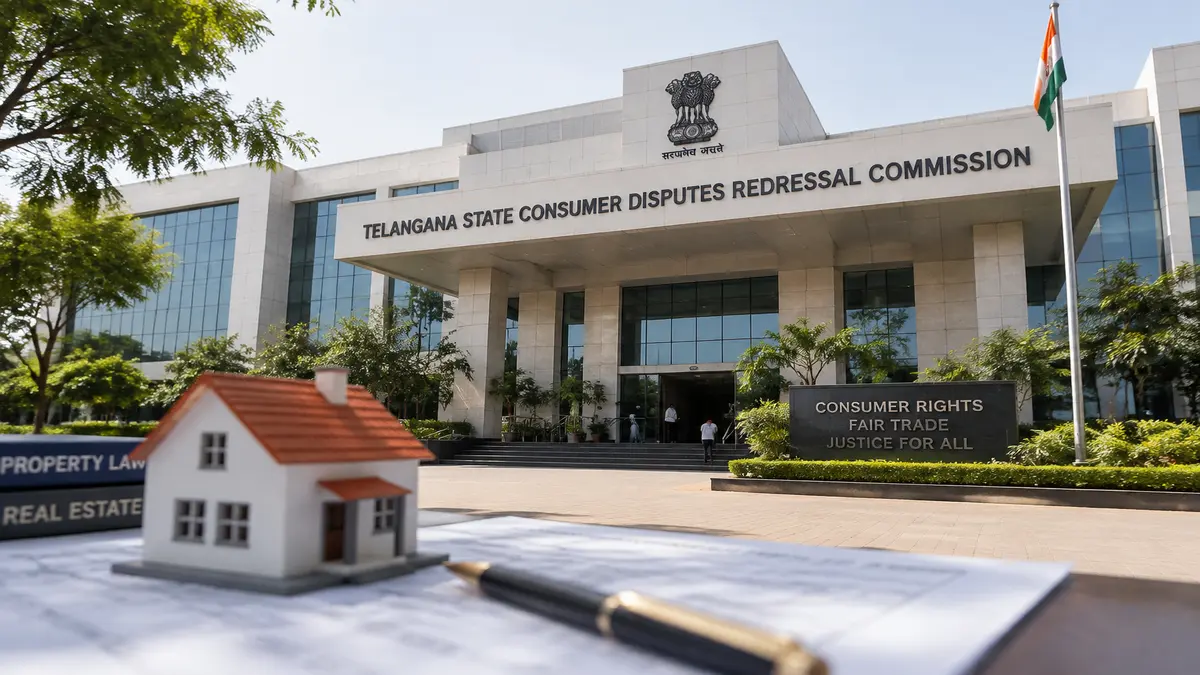
Hyderabad Commission Orders Registration of 294-Square-Yard HMDA Plot
A consumer commission in Hyderabad has directed a real estate developer to execute and register a revised 294-square-yard plot in favour of a 42-year-old buyer, alongside awarding ₹1.10 lakh in compensation and legal costs. In an order dated September 29, 2026, the district forum ruled that the promoter committed deficiency in service and engaged in unfair trade practices by withholding title registration despite collecting full consideration. The builder failed to execute the conveyance deed after the buyer paid ₹25.90 lakh initially and an additional ₹3.50 lakh following post-approval layout modifications.
| Detail | Info |
|---|---|
| Original Plot Area | 259 sq yards |
| Revised Plot Area Ordered Registered | 294 sq yards |
| Initial Amount Paid (2021) | ₹25.90 lakh |
| Additional Amount Paid (2024) | ₹3.50 lakh |
| Compensation Awarded | ₹1 lakh |
| Litigation Costs Awarded | ₹10,000 |
| Total Monetary Payout | ₹1.10 lakh |
| Order Date | September 29, 2026 |
Hyderabad Commission Orders Registration of 294-Square-Yard HMDA Plot
The complainant, who was 42 years old when filing the consumer case, stated that he purchased a 259-square-yard residential plot in early 2021. Between March and August 2021, he disbursed a total consideration of ₹25.90 lakh to the real estate development firm, completing the transaction partly through banking cheques and partly in cash. An agreement of sale was formally executed between the parties in April 2021, yet the developer did not execute or register a regular sale deed.
According to the facts presented before the commission, the builder obtained statutory layout approval from the Hyderabad Metropolitan Development Authority (HMDA) only in 2023. Following this delayed sanction, the developer restructured the internal layout plan, which altered individual plot demarcations, plot numbers, and overall surface areas. Under the newly sanctioned layout plan, the buyer’s allotted unit was revised to an expanded area of 294 square yards.
In 2024, the promoter demanded an additional ₹3.50 lakh from the buyer to account for the surplus square yardage, alongside statutory approval and registration charges. The complainant stated that he paid the additional amount under duress simply to safeguard his initial investment. Despite receiving the full differential consideration, the developer continued to defer registration, prompting the buyer to approach the consumer dispute redressal forum.
What the Hyderabad Ruling Means for Land Buyers
The consumer commission’s judgment directly binds the complainant and the respondent developers, holding the promoter parties jointly and severally liable to execute the conveyance deed and disburse the monetary awards. Beyond the immediate parties, the ruling offers critical guidance for land purchasers across Hyderabad and Telangana who find their sale deeds stalled due to pending planning permissions.
In regional plotted developments, sale agreements frequently link registration to future layout approvals. Buyers encountering unilateral layout changes or stalled handovers often evaluate filing a Telangana RERA Complaint or approaching consumer commissions to enforce their contractual rights. However, legal observers note that this specific order does not determine the outcome of other disputes, as consumer verdicts depend strictly on the distinct documentary evidence filed in each individual proceeding.
Scrutinising HMDA Layout Alterations and Developer Responsibilities
The proceedings before the consumer forum highlighted procedural complications that arise when developers market plotted layouts prior to receiving final planning sanctions from the Hyderabad Metropolitan Development Authority. Because final layout parameters can shift during the administrative clearance process, purchasers frequently face unforeseen boundary revisions and unexpected financial demands.
For buyers evaluating land transactions under Telangana RERA parameters, the judgment reinforces the necessity of verifying whether layout sanctions are active before paying substantial token sums. Property buyers must vigilantly track HMDA approval dates, preserve stamped payment receipts for both cheque and cash disbursements, and retain original agreements of sale. Notably, the consumer forum’s published record did not disclose the commercial project name or identify the developer entities by name.
“The developers received formal notice from the forum but chose not to appear or contest the complaint, leaving the buyer’s evidence and documentation completely unchallenged.”
How Delayed Sanctions Led to Increased Plot Demands
The dispute traces its origin to early 2021, when the buyer entered into an agreement of sale for a 259-square-yard residential unit. The complainant fulfilled his contractual payment obligations by remitting ₹25.90 lakh within a span of six months. However, the title transfer stalled because the layout had not yet received formal endorsement from the planning authority.
When the HMDA layout approval materialized two years later in 2023, the physical restructuring of the enclave compelled the buyer into an expanded 294-square-yard allotment. The subsequent demand of ₹3.50 lakh in 2024 escalated the dispute into an unfair trade practice claim. The commission observed that holding buyer capital for years while deferring title conveyance constituted an unequivocal deficiency in service.
Developer Directed to Register Deed Without Stated Deadline
Under the operative directions issued on September 29, 2026, the opposite parties must jointly and severally execute and register the final sale deed for the revised 294-square-yard approved plot. In addition to conveying clear title, the developer must pay ₹1 lakh towards consumer compensation and ₹10,000 to cover legal and complaint expenses.
The public record of the judgment does not specify an explicit compliance deadline for executing the conveyance deed or paying the financial award. Furthermore, available reports do not indicate whether the developer parties intend to comply voluntarily or file an appeal before the State Consumer Disputes Redressal Commission. As a result, the subsequent enforcement of the order remains a key procedural stage to watch.
Reality Check
The consumer commission ruled in the complainant’s favour largely because the developers failed to appear after receiving legal notices, leaving the buyer’s affidavits and receipts uncontested. An ex-parte decision does not guarantee immediate compliance, and because the judgment does not specify a rigid deadline, the buyer may still need to initiate execution proceedings if the promoter appeals or ignores the decree.
Analysis
Real estate analysts point out that deferred-registration contracts tied to prospective layout sanctions represent one of the most common vulnerability traps for plot buyers in urban peripheral zones. When developers alter layout densities post-approval, buyers are routinely pressured into paying steep price adjustments. While complete payment trails enabled this buyer to secure relief, purchasers should treat pre-sanction agreements with utmost caution.
Frequently Asked Questions
What did the Hyderabad consumer commission order?
The commission directed the developers to execute and register the sale deed for a revised HMDA-approved 294-square-yard plot, while awarding ₹1 lakh in compensation and ₹10,000 towards complaint costs.
How much had the buyer paid for the original plot?
The buyer paid ₹25.90 lakh between March and August 2021 for an original 259-square-yard residential plot, remitted partly through cheques and partly in cash.
Why was the plot size revised from 259 to 294 square yards?
The promoter secured HMDA layout approval in 2023, two years after the initial agreement. Subsequent layout modifications changed plot boundaries, extents, and numbering across the project.
Did the developers contest the complaint?
No. The commission noted that the developers received official notice but failed to appear or contest the proceedings, leaving the complainant’s documentary evidence unchallenged.
When must the developers comply with the order?
The published reports of the September 29, 2026 judgment do not outline a specific compliance deadline or mention if an appeal has been filed by the developers.
Stay Ahead on Hyderabad Real Estate
Get daily property news, price trends and verified listings.
Follow us on WhatsApp or download the BigProperty App for instant alerts.

