
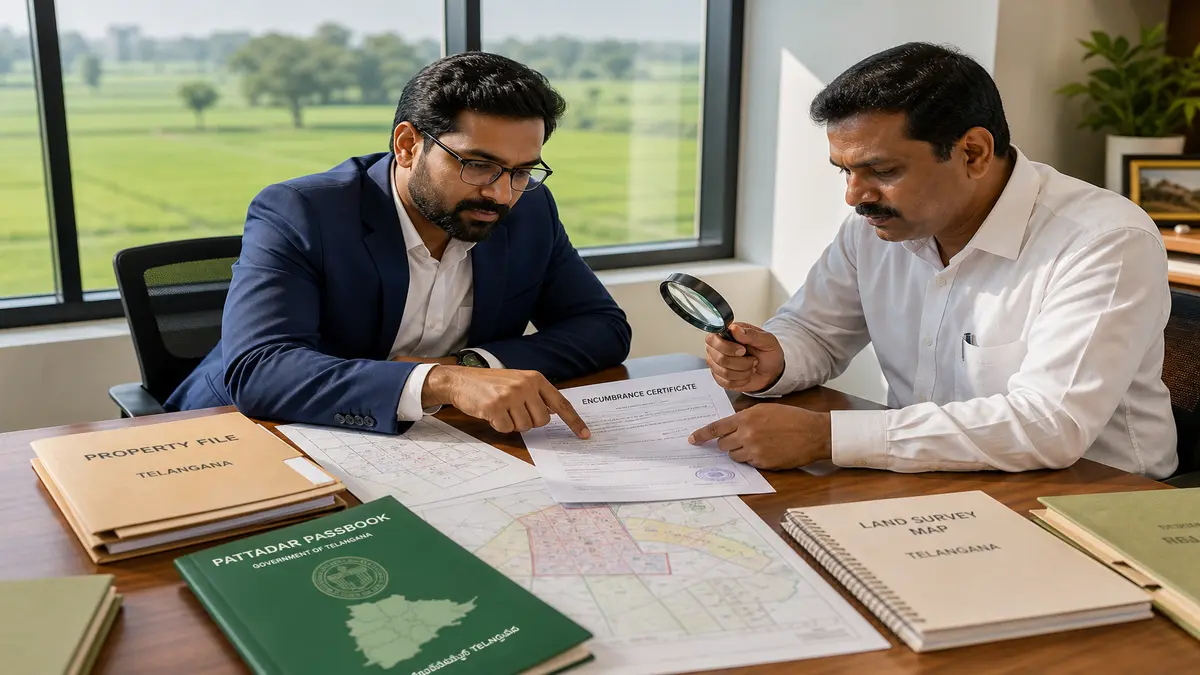
You finally found the perfect plot in Hyderabad. You pay the token advance, only to discover later that the seller secretly mortgaged the land to a private lender two years ago. This nightmare scenario happens every day. EC Verification is the only shield a property buyer has against hidden liabilities and fraudulent double registrations. Land records determine true ownership, and verifying them is non-negotiable before any real estate transaction.
The Registration Department of Telangana handles thousands of property documents daily. A massive percentage of property disputes arise simply because buyers skip basic due diligence. An Encumbrance Certificate clearly proves whether a property carries any legal dues, existing mortgages, or active bank loans. In 2026, relying solely on a seller’s word is a guaranteed path to financial ruin. You must verify the official ledger yourself.
This comprehensive guide explains exactly how to perform an official EC check in Telangana, avoid common portal errors, and protect your investments.
| Detail | Info |
|---|---|
| Governing Body | Registration and Stamps Department, Government of Telangana |
| Official Portal | registration.telangana.gov.in (IGRS) / bhubharati.telangana.gov.in |
| Applicable State | Telangana |
| Act Reference | Registration Act, 1908 |
| Application Fee | Online Search is Free (Certified Copy starts at ₹200) |
| Processing Time | Instant Online (1 to 3 days for certified copies from SRO) |
| Helpline / Contact | 1800 599 4788 |
| Last Updated | 2026 |
“Never trust a photocopy of a title deed; always extract a fresh Encumbrance Certificate directly from the government portal on the day you pay your advance.”
What is an Encumbrance Certificate?
An Encumbrance Certificate (EC) is an official legal document issued by the Sub-Registrar Office that records all registered transactions on a specific property over a defined period. Performing EC verification online ensures the property is free from monetary or legal liabilities. It acts as evidence of free title or ownership.
When a property is bought, sold, gifted, or mortgaged, the transaction is registered at the local Sub-Registrar Office (SRO). The details of this transaction are entered into the government ledger. The EC is essentially an extract from this ledger. It lists every registered document associated with the property’s survey number or plot number. If someone takes a home loan and pledges the property, the bank registers a Memorandum of Deposit of Title Deed (MODT). This MODT reflects on the EC, warning future buyers that the property is collateral for a loan.
The state issues the certificate in two primary formats. Form 15 contains the details of all registered transactions during the requested search period. Form 16, often called a Nil Encumbrance Certificate, is issued when no transactions have occurred during the requested period. Both forms hold immense legal weight in court and are mandatory for securing bank loans. Understanding how to read these forms correctly is a critical skill for any investor.
Objectives and Benefits of EC Verification
The primary objective of checking property records is risk elimination. Real estate involves vast sums of money, and verbal assurances carry zero legal weight. The formal registry is the ultimate source of truth.
- To confirm the current legal owner matches the seller claiming ownership.
- To identify any active mortgages, loans, or liens held by banks or private lenders.
- To track the historical chain of ownership and ensure title continuity.
- To detect fraudulent double registrations where the same land is sold twice.
- To verify that previous gift deeds, partition deeds, or release deeds were properly executed and registered.
Buyers and landowners receive substantial legal protection when they maintain clean records. The benefits extend far beyond a single purchase transaction.
- Banks instantly reject home loan applications without a clean 13-year or 30-year EC.
- Municipal authorities require these records to approve building permissions.
- Revenue officials demand clear encumbrance proof before approving mutation requests.
- Having an updated certificate significantly increases the resale value and marketability of your asset.
- It provides a solid legal foundation if you ever need to file an eviction suit against squatters or defend your boundaries.
Who Needs to Verify Encumbrance Records?
| Category | Applicable | When Required |
|---|---|---|
| Property Buyers | Yes | Mandatory before paying the token advance and again before final registration. |
| Landowners | Yes | Annually, to ensure no fraudulent documents have been registered against their survey number. |
| NRIs | Yes | Essential for remote asset monitoring and preventing illegal encroachment or sales. |
| Legal Heirs | Yes | Required during family partitions or when claiming inherited property rights. |
| Banks/Lenders | Yes | Crucial for evaluating collateral before sanctioning any mortgage or home loan. |
Documents Required for EC Application
While basic online searches require minimal data, applying for a formal, certified copy demands specific property identifiers. Missing one detail can yield inaccurate results.
| Document | Who Submits |
|---|---|
| Applicant Aadhar Card | The buyer, seller, or authorized agent. |
| Previous Sale Deed Copy | The current owner or the buyer verifying records. |
| Accurate Survey Number | The applicant, verified through a Telangana Pahani. |
| Plot and Layout Details | The applicant, for urban properties under municipal limits. |
| Village, Mandal, and District Names | The applicant, referencing the exact revenue jurisdiction. |
Pro Tip
Always perform your search using the “Document Number” option first if you have the previous sale deed. Searching by Survey Number can sometimes bring up hundreds of transactions for a massive agricultural parcel, making it impossible to find your specific plot. The document number narrows the search to exact title transfers.
How to Access and Verify EC Online via IGRS and Bhu Bharati
Telangana operates a dual system for property records, which often confuses first-time buyers. The Registration and Stamps Department runs the IGRS portal. This portal tracks all non-agricultural properties, including urban plots, flats, villas, and commercial spaces. If you are buying a house in Hyderabad, you will perform your verification on the IGRS website.
Conversely, agricultural land records are managed through the Bhu Bharati Land Search system. Agricultural lands do not have traditional Encumbrance Certificates in the same way urban plots do. Instead, the Bhu Bharati portal reflects the ownership status dynamically through the Record of Rights. Whenever agricultural land is sold, the mutation happens simultaneously, and the Pattadar Passbook is updated. Therefore, verifying agricultural title means checking the Bhu Bharati portal directly.
For agricultural land that has been converted to non-agricultural use (NALA conversion), the records migrate from the revenue department to the registration department. Understanding this transition is crucial. If a farmer sells a converted plot, you must check the historical agricultural roots on Bhu Bharati and the current layout transactions on IGRS.
Fees and Charges for Telangana EC
Digital access has democratized information, but certified legal documents still incur government fees. Always pay these fees through official channels to avoid intermediary markups.
| Service | Fee (Telangana) | Comparison State (AP) |
|---|---|---|
| Online Portal Search | Free | Free |
| Certified EC (First 30 Years) | ₹200 to ₹500 (approx) | ₹200 to ₹500 (approx) |
| Additional Search Years | ₹50 per extra year | ₹50 per extra year |
| Speed Post Delivery | ₹50 | Not widely available online |
| Urgent Processing at SRO | Variable SRO User Charges | Variable SRO User Charges |
Step-by-Step Process for EC Verification
Follow these exact steps to extract the encumbrance data from the official government portal. Do not use third-party apps that claim to provide this data, as they often cache outdated ledgers.
Visit the Official IGRS Portal
Open your web browser and navigate to the official Registration and Stamps Department website of Telangana (registration.telangana.gov.in). Look for the online services section on the right side of the homepage.
Select Encumbrance Search
Click on the link labeled ‘Encumbrance Search (EC)’. Read the disclaimer carefully. The portal will remind you that online data is for informational purposes and you should verify with the SRO for legal disputes.
Choose the Search Criteria
You can search by Document No, Layout Plots, Apartments, or Survey No. Selecting ‘Document No’ is the fastest and most accurate method if you have the seller’s registered deed.
Enter Property Details
Input the document number and the year of registration. Select the specific Sub-Registrar Office (SRO) where the document was registered from the drop-down menu.
Submit and Authenticate
Enter the security captcha code shown on the screen. Click the ‘Submit’ button to query the database. The system will retrieve the ledger entries matching your input.
Review the Transaction List
A list of all transactions linked to that property will appear. Check the names of the executing parties, the nature of the deed (Sale, Mortgage, Gift), and the dates.
Download the Statement
Click the print or download icon to save the statement. For a legally valid certified copy, you must log in to the citizen portal, pay the requisite fee, and request a digitally signed copy.
Common Errors in Encumbrance Certificates and How to Fix Them
Government ledgers are maintained by humans, and manual data entry migrations have caused numerous discrepancies. Spotting these errors early prevents registration delays.
| Common Error | How to Correct It | Authority Involved |
|---|---|---|
| Missing Recent Transaction | Submit the original registered deed and a request letter for manual update. | Sub-Registrar Office (SRO) |
| Incorrect Survey Number | File a rectification deed signed by both buyer and seller to amend the record. | SRO and Revenue Department |
| Spelling Mistakes in Names | Submit an affidavit along with Aadhar and the registered document for correction. | Sub-Registrar Office (SRO) |
| Cleared Mortgage Still Showing | Submit the bank’s original NOC and execute a Receipt/Release deed at the SRO. | Lending Bank and SRO |
| Wrong Extent of Land | Requires a formal rectification deed. Both parties must be present. | Sub-Registrar Office (SRO) |
Watch Out
The most commonly ignored issue is an active mortgage entry even after the home loan is fully repaid. Banks issue a No Objection Certificate (NOC), but buyers often forget they must physically take this NOC to the SRO and register a Release Deed. Until this deed is registered, the EC will permanently show the property as mortgaged.
Landowner and Buyer Legal Rights
The legal framework surrounding property records empowers citizens. You must assert these rights when dealing with uncooperative sellers or inefficient administrative offices.
- Right to Information: Under the Registration Act, 1908, the registry is a public record. Anyone can apply for an EC of any property by paying the prescribed fee; you do not need the owner’s permission.
- Right to Clear Title: A buyer has the statutory right to demand a clear, encumbrance-free title before completing a purchase. If the seller hides a mortgage, the buyer can terminate the agreement and demand a refund with interest.
- Right to Rectification: If the SRO makes a clerical error during digital data entry, the landowner has the right to demand a free correction by producing the original physical ledger or registered deed.
- Right to Appeal: If a Sub-Registrar refuses to register a document or update an entry without valid legal grounds, the citizen can file an appeal with the District Registrar or the Inspector General of Registration.
- Right to Digital Delivery: Under modern e-governance policies, citizens have the right to receive digitally signed certificates online without visiting the SRO physically.
5 Things Every Landowner Must Know Before Checking Records
- Form 15 vs 16
Form 15 shows active transaction history. Form 16 means zero transactions happened. Both are valid.
- The 30-Year Rule
Banks always demand a 30-year search history to rule out old family claims or legacy mortgages.
- SRO Supremacy
If the online portal shows an error, the physical physical ledger book at the local SRO is the final legal authority.
- Unregistered Danger
An EC only shows registered documents. It will never show unregistered oral agreements or plain paper wills.
- Bank Release
Paying off your loan isn’t enough. You must register the bank’s NOC to clear the encumbrance entry.
Did You Know?
An Encumbrance Certificate does not guarantee that the property layout is legally approved by HMDA or DTCP. It only proves that a transaction occurred. You can legally register an unapproved plot, and it will generate an EC, but municipal authorities will still reject your building permission application. Always verify layout approvals separately from title records.
Reality Check: What This Portal Cannot Fix For You
Despite the incredible convenience of digital portals, they are not magical solutions. The system only reflects what humans have entered into it. Legacy data errors remain a massive headache. When records were digitized in the early 2000s, thousands of manual ledger entries were typed incorrectly. If your father’s name was spelled wrong during digitization, the online portal will blindly repeat that error. The portal cannot autocorrect historical human mistakes.
Civil court stays are another massive blind spot. If two brothers are fighting over an inherited property in a civil court, the court may issue a stay order prohibiting sale. Unless one of the brothers physically takes this court order to the SRO and registers it as an encumbrance, the online EC will show the property as ‘clear’. A buyer might rely on the portal, purchase the land, and instantly face contempt of court charges. This is why local field inquiries remain essential.
Portal downtime is a harsh reality. The state servers frequently undergo maintenance or crash during peak hours. If you are sitting in a Sub-Registrar’s office waiting to execute a deed, and the server goes down, your transaction halts. The digital system provides no offline fallback for an immediate verification on the day of registration.
Finally, field-level verification is inescapable. The portal confirms the paper title, but it cannot confirm physical possession. The EC might show you as the undisputed owner of a 500-square-yard plot, but if a local mafia has built a compound wall around it, the digital certificate will not evict them. Legal title and physical possession are two entirely different battles in Indian real estate.
Watch Out
The single most important mistake buyers make is assuming an EC proves geographic boundaries. It only proves legal transactions. It does not guarantee that the plot numbers on the ground match the survey numbers on the paper. Always hire a private surveyor alongside your document checks.
Title Deed vs Encumbrance Certificate vs Record of Rights
| Factor | Encumbrance Certificate | Record of Rights (RoR) / Pahani |
|---|---|---|
| Primary Purpose | Shows registered transactions and liabilities (mortgages, sales). | Shows agricultural land ownership, cultivation details, and land nature. |
| Governing Body | Registration and Stamps Department | Revenue Department (Bhu Bharati) |
| Applicable Lands | Mostly Urban, Commercial, and Converted Plots | Strictly Agricultural Lands |
| Legal Proof | Proof of transaction history | Proof of current possession and revenue tax liability |
| Bank Loans | Mandatory for all home loans | Mandatory for agricultural crop loans |
Expert Tip
When reviewing an EC spanning 30 years, pay close attention to “Release Deeds” among family members. If a sister released her rights to her brother without proper consideration (money), her children might still file a civil suit claiming ancestral rights years later. Always have a lawyer verify the specific clauses inside historical release and partition deeds.
Official Land Records Resources
| Resource | Purpose | URL (plain text) |
|---|---|---|
| IGRS Telangana Portal | Urban Property Encumbrance Search | registration.telangana.gov.in |
| Bhu Bharati Portal | Telangana Agricultural Land Record Search | bhubharati.telangana.gov.in |
| Meebhoomi Portal | AP Land Record Verification | meebhoomi.ap.gov.in |
| Bhoomi Portal | Karnataka Land Record Search | landrecords.karnataka.gov.in |
Frequently Asked Questions
What is the official website for EC Verification in Telangana?
The official website for checking encumbrance records for urban and non-agricultural properties in Telangana is the IGRS portal (registration.telangana.gov.in). For purely agricultural lands, you must verify the ownership and mutation records through the Bhu Bharati portal.
How long does it take to get a certified EC online?
An informational EC can be downloaded instantly for free. However, if you apply for a digitally signed, legally certified document through the portal, it typically takes 1 to 3 working days for the local Sub-Registrar Office to process and approve the request.
Can I check the encumbrance status without a document number?
Yes, you can perform an EC Verification using alternative details. You can search by entering the exact Survey Number, Village name, and Mandal, or by using the Plot Number and Layout details if the property sits inside an approved municipal venture.
Why is my recent property purchase not showing on the portal?
It generally takes 24 to 48 hours for a newly registered deed to reflect on the public online search portal due to server syncing. If it does not appear after a week, there may be a manual data entry error at the SRO that requires a written rectification request.
What does a Form 16 mean when I apply for an EC?
If you receive a Form 16, it is commonly known as a Nil Encumbrance Certificate. This simply means that during the specific years you selected for your search, no registered transactions (sales, mortgages, or gifts) occurred on that particular property.
What happens if a bank mortgage is not cleared on the EC?
If an old mortgage still appears, you cannot legally sell the property to a buyer requiring a home loan. You must contact the original lending bank, obtain a formal No Objection Certificate (NOC), and register a Receipt or Release Deed at the SRO to clear the entry.
##FAQ_SCHEMA_START##{“@context”:”https://schema.org”,”@type”:”FAQPage”,”mainEntity”:[{“@type”:”Question”,”name”:”What is the official website for EC Verification in Telangana?”,”acceptedAnswer”:{“@type”:”Answer”,”text”:”The official website for checking encumbrance records for urban and non-agricultural properties in Telangana is the IGRS portal (registration.telangana.gov.in). For purely agricultural lands, you must verify the ownership and mutation records through the Bhu Bharati portal.”}},{“@type”:”Question”,”name”:”How long does it take to get a certified EC online?”,”acceptedAnswer”:{“@type”:”Answer”,”text”:”An informational EC can be downloaded instantly for free. However, if you apply for a digitally signed, legally certified document through the portal, it typically takes 1 to 3 working days for the local Sub-Registrar Office to process and approve the request.”}},{“@type”:”Question”,”name”:”Can I check the encumbrance status without a document number?”,”acceptedAnswer”:{“@type”:”Answer”,”text”:”Yes, you can perform an EC Verification using alternative details. You can search by entering the exact Survey Number, Village name, and Mandal, or by using the Plot Number and Layout details if the property sits inside an approved municipal venture.”}},{“@type”:”Question”,”name”:”Why is my recent property purchase not showing on the portal?”,”acceptedAnswer”:{“@type”:”Answer”,”text”:”It generally takes 24 to 48 hours for a newly registered deed to reflect on the public online search portal due to server syncing. If it does not appear after a week, there may be a manual data entry error at the SRO that requires a written rectification request.”}},{“@type”:”Question”,”name”:”What does a Form 16 mean when I apply for an EC?”,”acceptedAnswer”:{“@type”:”Answer”,”text”:”If you receive a Form 16, it is commonly known as a Nil Encumbrance Certificate. This simply means that during the specific years you selected for your search, no registered transactions (sales, mortgages, or gifts) occurred on that particular property.”}},{“@type”:”Question”,”name”:”What happens if a bank mortgage is not cleared on the EC?”,”acceptedAnswer”:{“@type”:”Answer”,”text”:”If an old mortgage still appears, you cannot legally sell the property to a buyer requiring a home loan. You must contact the original lending bank, obtain a formal No Objection Certificate (NOC), and register a Receipt or Release Deed at the SRO to clear the entry.”}}]}##FAQ_SCHEMA_END####HOWTO_SCHEMA_START##{“@context”:”https://schema.org”,”@type”:”HowTo”,”name”:”How to Perform EC Verification in Telangana Online”,”description”:”A complete step-by-step process to search, verify, and download an Encumbrance Certificate from the official IGRS Telangana portal.”,”totalTime”:”PT15M”,”step”:[{“@type”:”HowToStep”,”name”:”Visit the Official IGRS Portal”,”text”:”Open your web browser and navigate to the official Registration and Stamps Department website of Telangana (registration.telangana.gov.in). Look for the online services section on the right side of the homepage.”},{“@type”:”HowToStep”,”name”:”Select Encumbrance Search”,”text”:”Click on the link labeled ‘Encumbrance Search (EC)’. Read the disclaimer carefully. The portal will remind you that online data is for informational purposes and you should verify with the SRO for legal disputes.”},{“@type”:”HowToStep”,”name”:”Choose the Search Criteria”,”text”:”You can search by Document No, Layout Plots, Apartments, or Survey No. Selecting ‘Document No’ is the fastest and most accurate method if you have the seller’s registered deed.”},{“@type”:”HowToStep”,”name”:”Enter Property Details”,”text”:”Input the document number and the year of registration. Select the specific Sub-Registrar Office (SRO) where the document was registered from the drop-down menu.”},{“@type”:”HowToStep”,”name”:”Submit and Authenticate”,”text”:”Enter the security captcha code shown on the screen. Click the ‘Submit’ button to query the database. The system will retrieve the ledger entries matching your input.”},{“@type”:”HowToStep”,”name”:”Review the Transaction List”,”text”:”A list of all transactions linked to that property will appear. Check the names of the executing parties, the nature of the deed (Sale, Mortgage, Gift), and the dates.”},{“@type”:”HowToStep”,”name”:”Download the Statement”,”text”:”Click the print or download icon to save the statement. For a legally valid certified copy, you must log in to the citizen portal, pay the requisite fee, and request a digitally signed copy.”}]}##HOWTO_SCHEMA_END##
Need Help with a Land Records Issue
Whether you are checking a Pahani entry, tracking a mutation application, or verifying a patta — our team can guide you to the right resource.
Chat with us on WhatsApp or email us at [email protected]
Download the BigProperty App to check land record status, track mutation applications, and get property alerts in Hyderabad.

