
If you are a salaried employee with a monthly payslip, getting a home loan is easy. You walk into SBI or HDFC, and they roll out the red carpet.
But if you are Self-Employed—a shop owner, a freelancer, a contractor, or a doctor with cash income—major banks treat you like a “high-risk” customer. They ask for 3 years of ITR, audited balance sheets, and profit margins that most small businesses don’t show on paper.
This is where NBFCs (Non-Banking Financial Companies) like Bajaj Housing Finance and Tata Capital come in.
These two giants are famous for funding “Business Profiles” that banks reject. But which one is better for you in 2026?
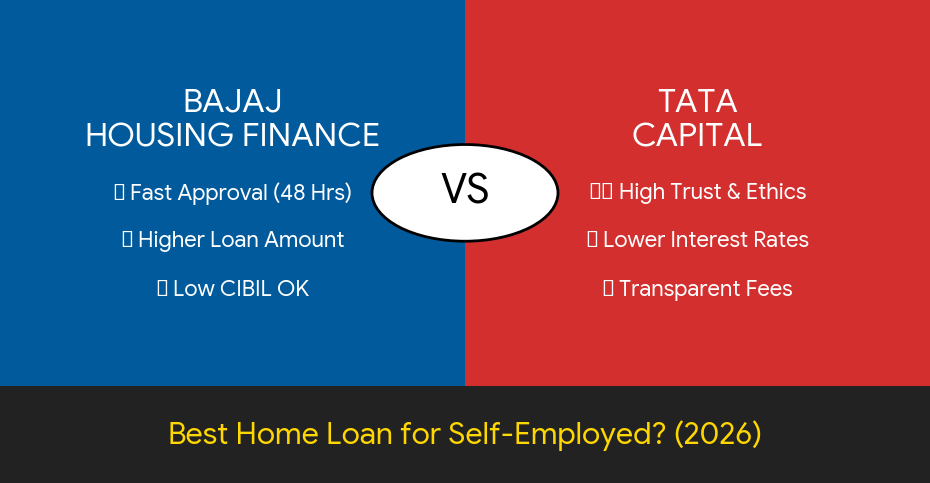
- Bajaj is known for speed (approval in 48 hours).
- Tata is known for trust and slightly better rates.
In this detailed comparison, we analyze their interest rates, hidden fees, and eligibility rules to help you decide.
Must Read: Complete Guide to Plot Loans in Hyderabad: Interest Rates & Banks List (2026)
Why Choose an NBFC Over a Bank?
Before we compare Bajaj and Tata, you need to understand why you should apply to them instead of SBI.
- Easy Eligibility: Banks look at “Net Profit” (which you might suppress to save tax). NBFCs look at “Gross Turnover” or “Bank Balance.”
- Higher Loan Amount: If SBI gives you ₹50 Lakhs, Bajaj might give you ₹70 Lakhs for the same profile because they calculate eligibility differently.
- Speed: NBFCs are built for speed. While a bank takes 3 weeks, NBFCs can disburse in 4-5 days.
Contender 1: Bajaj Housing Finance
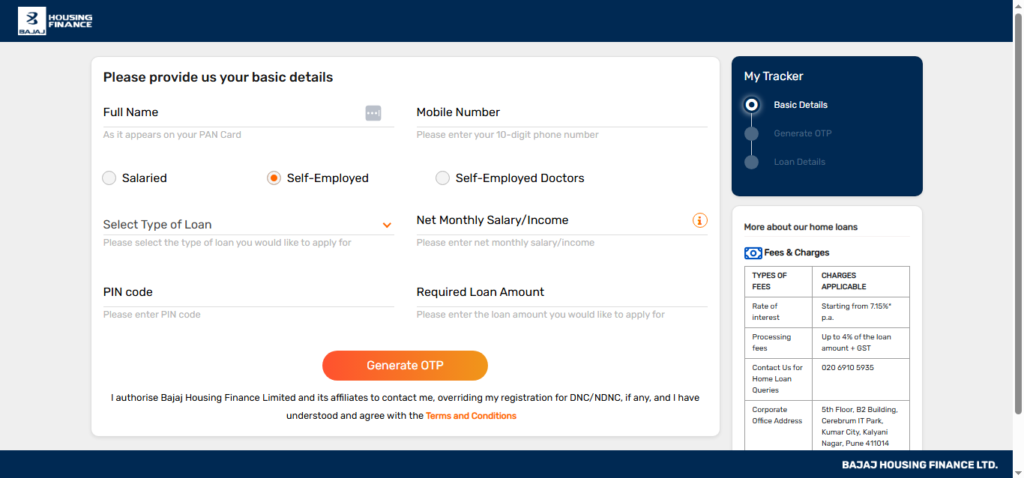
Bajaj is the “Speed King” of the Indian lending market. If you need to close a property deal in 3 days, Bajaj is your best bet.
The Pros (Why Choose Bajaj?)
- 48-Hour Approval: Their digital sanction process is incredibly fast. If your CIBIL is 750+, you can get a sanction letter online instantly.
- Loans for Low CIBIL: Bajaj is slightly more lenient. They may fund a score of 700-720 if your business turnover is healthy.
- Top-Up Loans: Bajaj is generous with “Top-Up Loans.” If you take a home loan, they often offer a “Personal Loan” on top of it for interiors or furnishing without extra paperwork.
The Cons (The Catch)
- Higher Processing Fee: They usually charge 1.0% to 1.5% of the loan amount + GST. This is significantly higher than SBI’s flat ₹5,000 fee.
- Aggressive Follow-up: If you miss a single EMI, their collection team is very strict.
Must Read: SBI vs. HDFC Plot Loan: Which is Best for Open Plots in Telangana?
Contender 2: Tata Capital
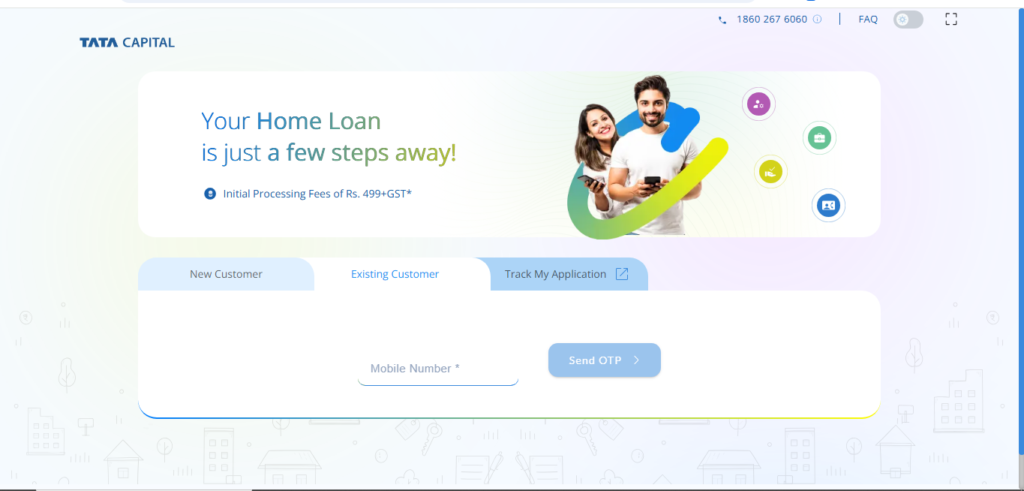
Tata Capital carries the “Tata Trust.” They operate more like a bank than a typical NBFC.
The Pros (Why Choose Tata?)
- Better Interest Rates: Tata Capital often offers rates that are 0.25% – 0.50% lower than Bajaj, bringing them closer to bank rates.
- Transparency: Like the Tata brand, their fee structure is transparent. There are rarely any “hidden insurance” costs forced upon you.
- PMAY Benefits: They are very active in processing PMAY (Pradhan Mantri Awas Yojana) subsidies for eligible first-time buyers.
The Cons (The Catch)
- Stricter Income Proof: Unlike Bajaj, Tata Capital prefers borrowers who have filed ITR for at least 2 years. They are less likely to fund “Cash Income” profiles compared to other NBFCs.
- Slower than Bajaj: Their verification process is thorough, so it might take 7-10 days for disbursement.
Head-to-Head Comparison: Bajaj vs. Tata (2026)
Here is the quick snapshot for busy business owners.
| Feature | Bajaj Housing Finance | Tata Capital Housing Finance |
| Best For | Speed & High Loan Amount | Trust & Lower Interest Rates |
| Interest Rate | 8.85% – 10.50% | 8.75% – 9.75% |
| Processing Fee | High (Up to 1.5%) | Moderate (Up to 1.0%) |
| Approval Time | 48 Hours (Digital Sanction) | 5 – 7 Days |
| CIBIL Requirement | Lenient (700+ OK) | Strict (725+ Preferred) |
| Foreclosure Charges | Zero (For Floating Rate) | Zero (For Floating Rate) |
The “Cash Income” Solution (Surrogate Programs)
What if you don’t have ITRs?
Both Bajaj and Tata have special programs called “Surrogate Income Programs” where they calculate your eligibility based on indirect proof of income.
1. Banking Surrogate (Average Bank Balance)
Instead of looking at your profit, they look at your Average Monthly Balance (AMB) for the last 12 months.
- How it works: If you maintain an average balance of ₹1 Lakh in your savings account, they assume you can pay an EMI of ₹40,000.
- Winner: Bajaj Housing Finance is more aggressive with this program.
2. GST Surrogate (Turnover Based)
If you are a trader with high turnover but low net profit (to save tax), this is for you.
- How it works: They calculate your eligibility based on your Gross GST Turnover.
- Winner: Tata Capital prefers this method for SME owners.
Must Read: Securing Loans for Unregistered Properties: What We Can Do?
Hidden Charges You Must Know
NBFCs are famous for adding “extra costs.” Be careful of these two:
- Insurance Bundling: When they sanction your loan, the agent might say, “Sir, you must take this ₹50,000 property insurance, otherwise loan won’t disburse.”
- Fact: Insurance is optional. You can buy a cheaper policy from outside for ₹5,000. Tata Capital is generally more ethical about this than Bajaj.
- IMD (Initial Money Deposit): They might ask for a non-refundable login fee of ₹5,000 just to process the file.
Final Verdict: Which One Should You Choose?
Choose Bajaj Housing Finance If:
- You need the money Urgent (within 3-4 days).
- Your CIBIL score is slightly low (700-720).
- You want a Top-Up Loan immediately for interiors.
- You rely on “Banking Surrogate” (Cash flow in bank, but low ITR).
Choose Tata Capital If:
- You want the Lowest Interest Rate possible for a self-employed profile.
- You have filed ITRs properly for 2 years.
- You want a “No Nonsense” ethical lender with fewer hidden calls.
Also Read: The 7 Steps to Get a Housing Loan
FAQs
Bajaj Housing Finance is generally more lenient. They may fund a CIBIL score of 700-720 if your bank balance is healthy. Tata Capital is stricter and usually prefers a score of 725+ for the best interest rates. If your score is below 700, both might reject you or charge a very high interest rate (10.50%+).
Yes. Both Bajaj and Tata offer “Surrogate Income Programs.” Instead of asking for ITR (profit proof), they check your Gross GST Turnover or your Average Monthly Bank Balance. If you maintain a good balance, they will calculate your loan eligibility based on that “Cash Flow” rather than your “Net Profit.”
NBFCs charge higher fees than banks.
Bajaj Housing Finance: Usually charges 1.0% to 1.5% of the loan amount + GST.
Tata Capital: Usually charges 0.50% to 1.0% + GST. Note: You can always negotiate this fee during the final sanction stage.
For Individual Borrowers on a Floating Interest Rate, there are ZERO foreclosure charges as per RBI rules. However, if you take the loan in the name of a Company/Firm (Non-Individual) or on a Fixed Rate, both Bajaj and Tata may charge a penalty of 2% to 4% on the outstanding principal.
Bajaj Housing Finance is the clear winner for speed. They have a digital sanction process that can approve your loan in 48 hours if your documents are digital. Tata Capital follows a more traditional verification process, which typically takes 5 to 7 days.
Conclusion
For self-employed individuals in 2026, Tata Capital is the better long-term partner due to lower rates, while Bajaj Housing Finance is the best “Emergency Fund” provider due to its lightning-fast speed.
Are you applying for a loan this month? Which lender gave you the best offer? Let us know in the comments!

. Check eligibility for cash income and low CIBIL score.)